






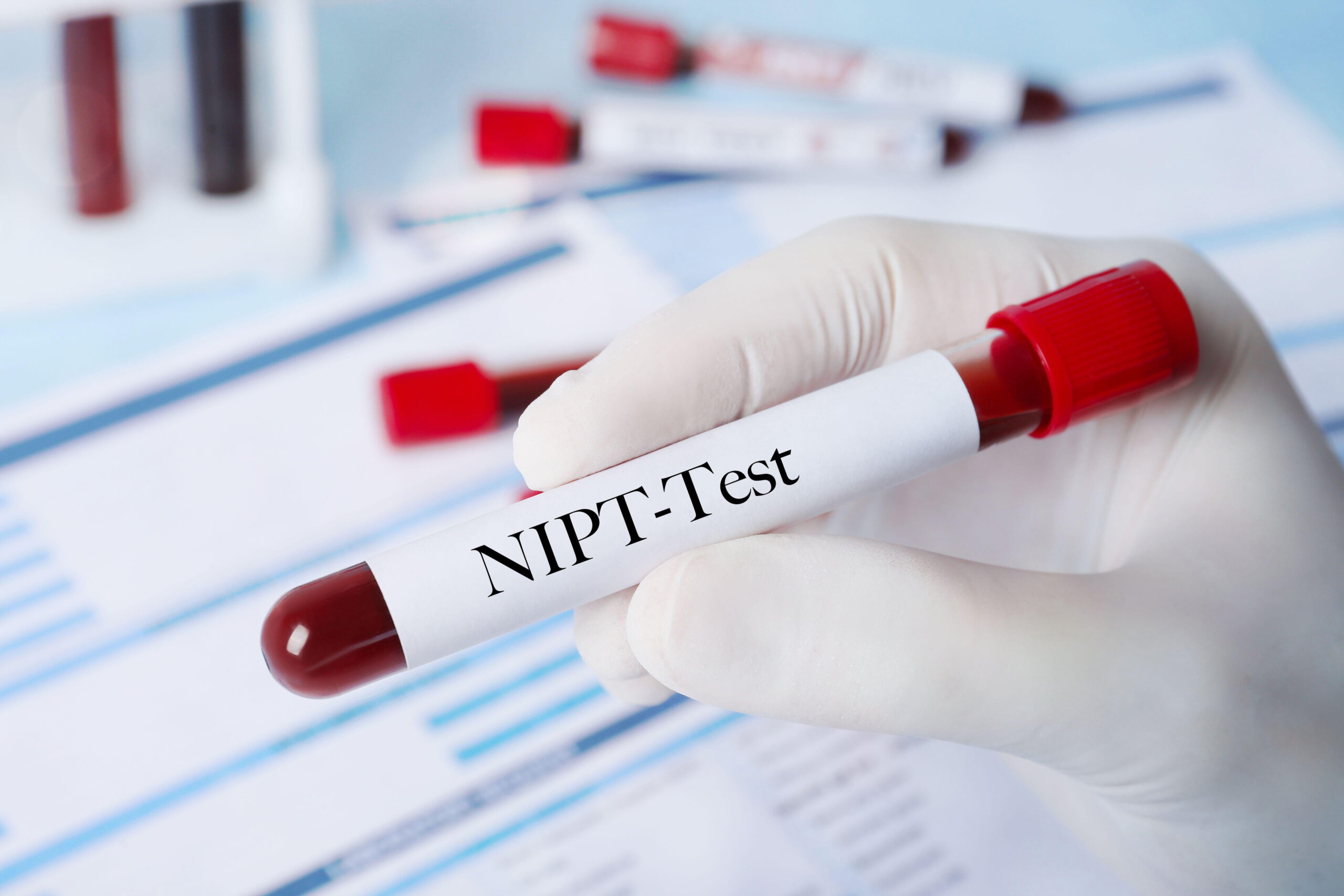
Understanding NIPT Screening

Pregnancy is an exciting time, but it's natural to feel anxious about your baby's health and development. Non-Invasive Prenatal Testing (NIPT) is a simple blood test that can offer extra reassurance early in pregnancy. From around 10 weeks, a small sample of your blood is taken and analysed to look at tiny fragments of your baby's DNA from your placenta that naturally circulate in your bloodstream. Because it is non-invasive (uses a sample of the mother's blood taken from her arm), there is no risk to you or your baby whatsoever.
NIPT doesn't diagnose a condition outright, but it is considered an accurate screening test for some common conditions. For example, it can detect over 99 % of cases of Down's syndrome (Trisomy 21), although that percentage can vary by provider and condition being screened for.
It is also significantly more accurate than older screening methods, including the NHS Combined Test (around 85–90 % accurate for Down's syndrome) only available at around 11-14 weeks of pregnancy. Most parents find that a "low-chance" result provides real peace of mind, helping them enjoy the rest of their pregnancy with less worry. If the test shows a "higher-chance" result, you will have the opportunity to discuss your results with one of our experienced midwifes and your health care provider to go over your options, which may include diagnostic tests such as amniocentesis or chorionic villus sampling (CVS) with the NHS to confirm any findings.
At Baby Scanning Boutique, we believe information is empowering.
NIPT gives expectant parents clearer insight, earlier in pregnancy, using the most advanced science available — all with a simple blood test and a friendly, caring approach from our experienced team.
Our NIPT Test Options
At Baby Scanning Boutique, we use the PanoramaTM test from Natera, one of the world's leading laboratories in prenatal screening.
Panorama uses advanced technology to analyse your baby's DNA from your placenta and provide the most accurate results available via NIPT.
We offer three levels of Panorama screening, each carefully tailored to suit different parents' preferences and requirements for information about their baby's health.
Panorama Prenatal
Screens for the most common chromosomal conditions:
- Down's syndrome (Trisomy 21)
- Edwards' syndrome (Trisomy 18)
- Patau's syndrome (Trisomy 13)
- Sex-chromosome aneuploidies – conditions involving X and Y chromosomes, such as Turner and Klinefelter syndrome
- Triploidy – a rare condition detected only by Panorama, providing an extra layer of reassurance
- Gender (Optional)
Panorama Prenatal +
Includes everything in the Panorama Prenatal, plus an additional condition:
- 22q11.2 Deletion Syndrome (DiGeorge syndrome) – the most common microdeletion syndrome that can affect heart and immune development.
- Gender (Optional)
Panorama Prenatal Extended
Covers everything in the Panorama Prenatal +, plus a broader set of rare but serious microdeletion conditions:
- Prader–Willi syndrome
- Angelman syndrome
- 1p36 deletion syndrome
- Cri-du-chat syndrome
- Gender (Optional)
All Panorama tests include full analysis for Triploidy, something no other major NIPT provider currently offers. Additionally, you have the choice to add babies gender to the test too free of charge for each level.
Please Note: An ultrasound scan must have been carried out prior to having an NIPT. If you opt for the test only NIPT, you must have already attended your 12 week NHS scan. Please bring your NHS scan report with you as we require this to confirm gestational age.
What's included in your NIPT package
- Appointment duration: 20 Minutes
- Includes early or late reassurance scan (depending on your gestational age and package chosen)
- Confirm single or multiple pregnancies
- Blood sample
- Results arrive within 7-14 working days.
- The opportunity to discuss prenatal screening options with our highly experienced Midwife before your test
- Optional confirmation of your baby's gender
- An ultrasound Scan to confirm viability and gestation
- Your blood sample will be taken by a fully trained and experienced nurse. For added comfort, butterfly needles are available for those with more delicate veins.
- The opportunity to discuss your results with our experienced Midwife once your report is ready
- Information about your options and support with your choices
Please Note:
- An ultrasound scan must be completed before this blood test can be performed. If you choose to have a blood test only, we will need to review a copy of your ultrasound scan report before taking your blood sample.
- There is no extra charge for twins or multiple pregnancies
- Please note we only provide scans to persons over the age of 18
- The video recording has no audio capability
- Sex confirmation, the earliest you can have a scan to check your baby's sex is around 14 weeks. An NIPT can be taken from as early as 10 weeks, with the results arriving just 7-14 working days later. Having an NIPT as part of your first scan appointment provides you with a more rounded introduction to your baby, with an earlier possible insight into what the sex is likely to be.
Preparing for your Panorama NIPT
Please attend your scan and blood test at least 5 minutes prior to your appointment as there is some paperwork you will need complete first.
Try to keep hydrated If an ultrasound is part of your visit, drinking a few glasses of water about an hour beforehand can help make the baby more visible and helps us achieve clearer images.
If you have any further questions about NIPT, please do not hesitate to contact us and we will be happy to discuss this with you in more detail. Information leaflets are also available in clinic.
Please let us know prior to your appointment if any of the following:
• You have a disability
• You have any allergies that we should be aware of
• You have a medical condition that we need to be made aware of
• If you do not speak and/or read and understand English
• Anything else we should be made aware of
Do not book an appointment if either of the following apply to you:
1. You are under the age of 18 as we have a strict over 18 policy (We may need to ask for proof of age and ask to see ID prior to your appointment)
2. If you have been experiencing any pain or bleeding please contact your NHS care provider before booking with Baby scanning boutique.
FAQs
Most parents find that a NIPT test can provide real peace of mind, helping them enjoy the rest of their pregnancy with less worry or its early detection can give parents more time to consider their options and prepare for the arrival of their child.
At Baby Scanning Boutique, we believe information is empowering. NIPT gives expectant parents clearer insight, earlier in pregnancy, using the most advanced science available — all with a simple blood test and a friendly, caring approach from our experienced team. You will be given the opportunity to discuss prenatal screening before you undertake the test with an experienced Midwife with extensive fetal medicine experience.
If this sounds like the level of clarity and reassurance you're looking for, then our NIPT service may be the perfect choice for you.
Both the NHS Combined Test and NIPT estimate the chance of certain chromosomal conditions such as Down's, Edwards' and Patau's syndromes.
However, there are important differences that make Panorama NIPT a more advanced and reassuring choice for many parents.
| Feature | Panorama™ NIPT (Baby Scanning Boutique) | NHS Combined Test |
|---|---|---|
| When available | From 10 weeks | Around 12–14 weeks |
| How it works | Simple blood test analysing placental DNA (non-invasive). Available combined with ultrasound scan if desired. | Combines Nuchal translucency scan + blood test |
| Conditions screened | Down's, Edwards', Patau's, Sex chromosomes ± microdeletions | Down's, Edwards', Patau's only |
| Accuracy for Down's | Over 99 % detection rate | **Approx. 85–90 % ** |
| False-positive rate | < 0.1 % | 4–5 % |
| Risk to baby | None – completely non-invasive | None – completely non-invasive |
| Counselling & support | The opportunity to discuss prenatal screening options with our highly experienced Midwife before your test | Standard NHS support |
| Turnaround time | 5–7 working days | Standard NHS timescales |
| Additional insight | Detects Triploidy | Not available |
NIPT offers earlier, more accurate reassurance for parents who want to know more about their baby's health before the routine 12-week NHS scan, giving parents more time to consider their options and prepare for the arrival of a child with special needs if necessary.
Every client at Baby Scanning Boutique receives clear, compassionate guidance from our experienced midwife, to discuss prenatal screening options and what the test can tell you before your test , and the opportunity to discuss your results once your report is ready.
NIPT is suitable for any expectant parent who wants extra reassurance about their baby's health during pregnancy. It's safe, uses the most accurate screening test available for common chromosomal conditions and it's a completely non-invasive test that can be chosen by an expectant mother after 10 weeks of gestation — whether you simply want peace of mind or have been advised to have additional screening.
While NIPT is increasingly available to all pregnant women, it can be particularly helpful for:
- Women aged 35 or older, as the likelihood of certain chromosomal conditions increases with age.
- Those with a family history of genetic or chromosomal disorders, who wish to understand their baby's risk early on.
- Pregnancies with abnormal ultrasound findings, where further information may guide next steps.
- Women with a previous pregnancy affected by a chromosomal condition, seeking earlier reassurance this time.
At Baby Scanning Boutique, every pregnancy is unique.
Whether you're looking for reassurance, following a hospital recommendation, or simply want to know more about your baby's health, our experienced team is here to guide you through each step with understanding and care.
Please note: Early gestation, high BMI, or low fetal fraction may lead to a "no-call" result requiring repeat sampling.
The Panorama™ prenatal screen is designed for women of any age and ethnicity who are at least 10 weeks pregnant. It cannot currently be used by women carrying three or more babies (triplets and above), women who have used an egg donor or surrogate carrying more than one baby (twins or triplets), or those who have received a bone marrow transplant.
Exclusions:
- Are carrying three or more babies (triplets and above)
- Egg donor carrying more than one baby (twins or triplets)
- Surrogate carrying more than one baby (twins or triplets)
- If one of the fetuses is no longer viable
- Di George (22q) screening not available for dizygotic twins or egg donor
- Comprehensive panel not available for twins or egg donors
- Bone marrow transplant
Please note: Early gestation, high BMI, or low fetal fraction may lead to a "no-call" result requiring repeat sampling.
You can have the NIPT test if you are carrying twins.
In Twin Pregnancies (Identical or non-identical) we can screen for…
- Trisomy 21 (Down Syndrome)
- Trisomy 18 (Edward Syndrome)
- Trisomy 13 (Patau Syndrome)
- Gender of each twin (optional)
- Zygosity (to see if twins are identical)
- Individual fetal fraction for non-identical twins
If our screening finds that your twins are identical, Panorama can additionally screen for:
- Sex Chromosome Trisomies
- X0 Monosomy X (Turner Syndrome)
- XXY Klinefelter Syndrome
- XYY Jacob Syndrome
- XXX Triple X Syndrome
- Microdeletion
- 22q Deletion Di George Syndrome
There are a few restrictions though:
- triplets or higher multiple pregnancies.
- If one of the fetuses is no longer viable
- If an empty second sac is seen
- If your pregnancy is a result of IVF when two embryos are transferred and one is viable
- Egg doner Pregnancies (if twins or more)
- Surrogate Pregnancies (if twins or more)
- You can have the Panorama NIPT test, but not our NIPT+ or NIPT Extended packages
- Your NIPT will still screen for ..
- Trisomy 21
- Trisomy 18
- Trisomy 13
Note: If your egg donor or surrogate pregnancy is carrying two or more babies (twins and above) then unfortunately none of the Panorama NIPT packages can be performed in these circumstances.
Yes, all of our packages come with Optional confirmation of your baby's gender
Our NIPT screening packages cover a select group of chromosomal conditions that can affect development, health and growth. While these conditions vary in how common or rare they are, some are considered serious and can have significant medical implications. The categories below provide a simple overview of what each group represents, how severe they typically are, and how frequently they occur in the general population.
Common trisomies
(Down's syndrome, Edwards' syndrome, Patau's syndrome)
Common trisomies occur when there is an extra copy of chromosome 21, 18 or 13. They are among the most well-known chromosomal conditions screened in pregnancy. Down's syndrome is relatively more common (around 1 in 700 births), while Edwards' and Patau's syndromes are much rarer (1 in 5,000 and 1 in 13,000 respectively) and usually more severe, often associated with significant medical complications.
Sex Chromosome Aneuploidies (SCAs)
(Turner syndrome, Klinefelter syndrome, Triple X, Jacob's syndrome)
SCAs occur when there is a missing or extra X or Y chromosome. These conditions are generally less severe than the common trisomies and many individuals lead healthy lives with the right support. They are considered relatively rare but still occur in around 1 in 500–2,500 births, depending on the specific condition.
Common microdeletions
(DiGeorge, Prader–Willi, Angelman, 1p36 deletion, Cri-du-chat)
Microdeletions involve a small missing piece of a chromosome, often leading to moderate to severe developmental, medical or learning difficulties. These syndromes are comparatively rare (typically between 1 in 4,000 and 1 in 10,000 births), but due to their severity they can have a significant impact on health and development.
Triploidy
Triploidy occurs when a baby has an entire extra set of chromosomes (69 instead of 46). This is an extremely rare and very severe condition, affecting around 1–2% of recognised pregnancies and is sadly a fatal condition usually resulting in early miscarriage.
Understanding test accuracy can be a little complex, as there are four key measures, each describing something slightly different. Some of these measures are closely related—such as sensitivity compared with PPV, and specificity compared with NPV—but each plays an important role in interpreting your results.
Below, you'll find clear definitions of all four accuracy measures, followed by a table showing how the Panorama test performs for each one.
What is sensitivity?
The sensitivity describes how effectively a test can identify pregnancies that truly have a certain chromosomal condition.
What is specificity?
Specificity reflects how well the test recognises pregnancies that do not have the condition. A highly specific test produces very few false-positive results.
What is the Positive Predictive Value (PPV)?
PPV indicates the chance that a high-probability result is correct.
What is the Negative Predictive Value (NPV)?
NPV is the likelihood that a low-probability result is accurate, meaning the baby is very unlikely to have the condition.
| CONDITION | SENSITIVITY (95% CI) |
SPECIFICITY (95% CI) |
PPV | NPV |
|---|---|---|---|---|
| Down's Syndrome | >99.9% (CI 97.1-100) | >99% (CI 99.93-99.99) | 95% | >99.99%† |
| Edwards Syndrome | 94.1% (CI 82.9-100) | >99% (CI 99.96-100) | 91% | >99.99%† |
| Patau Syndrome | >99% (CI 73.5-100) | >99% (CI 99.96-100) | 68% | >99.99%† |
| Turner Syndrome | 83.3% (CI 53.5-100) | >99% (CI 99.7-100) | 78% | >99.99%† |
| triploidy | >99% (CI 66.4-100) | >99% (CI 99.5-100) | 7.50% | >99.99%† |
| Triple X/XXX Syndrome | 70.4% (CI 53.2-87.5) | 99.9% (CI 99.90-100) | 83% | 99.92%† |
| DiGeorge Syndrome | 83.3% (CI 51.6-97.9) | >99% (CI 99.91-99.98) | 53% | 99.9%(CI 99.9-100) |
| 1p36 deletion syndrome | >99% (CI 2.5-100) | >99% (CI 99.1-100) | 7-17% | 99.99%† |
| syndrome**† 12,13 | 95.5% (CI 77.2-99.9) | >99% (CI 99.1-100) | 10% | >99.95%† |
| syndrome**† 2,13 | >99% (CI 85.8-100) | >99% (CI 99.1-100) | 2-5%‡ | >99.99% |
| syndrome**† 12,13 | 93.8% (CI 69.8-99.8) | >99% (CI 99.1-100) | 5% | >99.99% |
Most results are available within two weeks.
In a small number of cases—around 1.6% (compared with roughly 3% for many other NIPT tests)—a result cannot be provided from the first sample, usually due to insufficient fetal DNA. If this happens, a repeat blood draw may be needed, which is offered at no additional cost. After a second sample, only around 0.03% of tests remain unreportable.
You will be given the opportunity to discuss your selected prenatal screening package with our experienced midwife to ensure it is the most suitable one for you. After attending your appointment for the ultrasound and the blood sample is taken, it is then sent off to the laboratory for analysis. Once the processing period is complete—typically around two weeks—you will receive your results.
When your results are returned to us, you will have a further opportunity to discuss your results with our experienced midwife who will contact you by phone to discuss them in detail, answer any questions, and guide you through the next steps if needed, which will include speaking with your NHS healthcare provider.
Possible outcomes
Each condition analysed in the test will be reported as one of three result categories:
Low probability
This indicates that your baby is very unlikely to have the chromosomal conditions included in the Panorama panel.
High probability
A high-probability result does not confirm a diagnosis. It signals an increased chance that the condition may be present. In this situation, you may be advised to speak with a genetic counsellor or fetal medicine specialist, and you may be offered diagnostic testing such as amniocentesis or CVS. Screening results alone should never be used to make irreversible pregnancy decisions.
No result/inconclusive
In a small number of cases, the sample may not contain enough fetal DNA to provide a conclusive result. If this occurs, we will arrange a repeat blood draw, which is usually sufficient to obtain a reportable outcome (only 0.03% of tests remain unreportable).
We recognise that receiving a high-probability result can feel overwhelming, but it's important to remember that NIPT is a screening test, not a diagnostic test.
A high-probability result does not confirm that your baby has a chromosomal condition. Instead, it suggests that the likelihood is higher than expected and that further assessment may be appropriate. Your healthcare team may recommend speaking with a genetic counsellor or fetal medicine specialist, and you may be offered diagnostic tests such as amniocentesis or CVS for confirmation. It is important to remember that no irreversible decisions should be made based solely on a screening result.
Click Here For Further NIPT Information and Decision Support
A low probability result indicates that it is very unlikely that your baby has one of the conditions on the Panorama panel. You will have the opportunity to discuss your results with an experienced Midwife and a copy of your results will be provided to discuss further with your healthcare provider
Please note: A "low-chance" result greatly reduces but does not eliminate risk. Medical decisions should always be made with your healthcare provider, who may recommend diagnostic testing (CVS, amniocentesis, postnatal testing).
Results can also be inconclusive, which happens in less than 1% of cases. This is usually because the proportion of fetal DNA present in the sample is not high enough to give an accurate result. About 1 in 65 tests may return non-reportable results; a second blood draw (which is free of charge) is often recommended.
The test may be repeated with the hope that the fetal DNA levels will have increased due to the increased gestation. In some rare cases however, the fetal DNA is naturally low (this could mean there is a small chance Panorama may detect findings relating to the mother's own genetic profile or health rather than the babies) and in these instances a result cannot be yielded.
A Nuchal Translucency (NT) ultrasound scan measures the fluid at the back of the baby's neck. When combined with a maternal blood test and other factors such as age, it provides a risk estimate for conditions like Down's syndrome. NT screening does not look at the baby's chromosomes directly—it simply calculates the likelihood of certain chromosomal conditions.
Non-Invasive Prenatal Testing (NIPT), on the other hand, analyses cell-free fetal DNA circulating in the mother's bloodstream. This allows NIPT to directly screen for chromosomal differences, including Down's syndrome (Trisomy 21), Edwards' syndrome (Trisomy 18) and Patau's syndrome (Trisomy 13).
Because NIPT examines fetal DNA, it provides a much higher detection rate than traditional NT screening. It is one of the most accurate antenatal screening methods available and is recommended by the International Society for Prenatal Diagnosis (ISPD).
Yes. A higher BMI can reduce the amount of cell-free fetal DNA (fetal fraction) available in the mother's blood. Because of this, the test may not always have enough fetal DNA to produce a reliable result.
For example, women weighing around 140kg typically have a fetal fraction that is about half that of women weighing approximately 70kg. This lower fetal fraction can increase the likelihood of receiving a "no-call" or inconclusive result.
Our Core package does not test for any microdeletions, it only tests for the common Trisomy's (Down's syndrome, Edwards syndrome & Pataus syndrome). Our NIPT+ package tests for those same trisomy's plus 22q11.2 microdeletion and our Extended package tests for all those plus 4 more microdeletions which are Prader-Willi, Angelman, 1p36 deletion and Cri-du-chat. Please note there are some restrictions for twin and multiple pregnancies, egg doner pregnancies and surrogate pregnancies (please see those specific questions for further details)
Yes all of our packages test for the following sex chromosome anomalies..
- Turner Syndrome (Monosomy X)
- Klinefelter Syndrome (XXY)
- Triple X (XXX)
- Jacobs Syndrome (XYY)
Please note there are some restrictions for twin and multiple pregnancies, egg donor pregnancies and surrogate pregnancies (please see those specific questions for further details)
If you are experiencing pain or bleeding, go directly to your local A&E or contact your midwife – do not book an ultrasound scan. This is because you may be experiencing a medical emergency and waiting for a scan will cause a potentially harmful delay.
Click Here For Further NIPT Information and Decision Support
Please let us know prior to your appointment if any of the following:
• You have a disability
• You have any allergies that we should be aware of
• You have a medical condition that we need to be made aware of
• If you do not speak and/or read and understand English
• Anything else we should be made aware of
Do not book an appointment if either of the following apply to you:
1. You are under the age of 18 as we have a strict over 18 policy (We may need to ask for proof of age and ask to see ID prior to your appointment)
2. If you have been experiencing any pain or bleeding please contact your NHS care provider before booking with Baby scanning boutique.
Ready to Book Your NIPT Test?
Get peace of mind with the most advanced prenatal screening available
Book Now Contact Us